
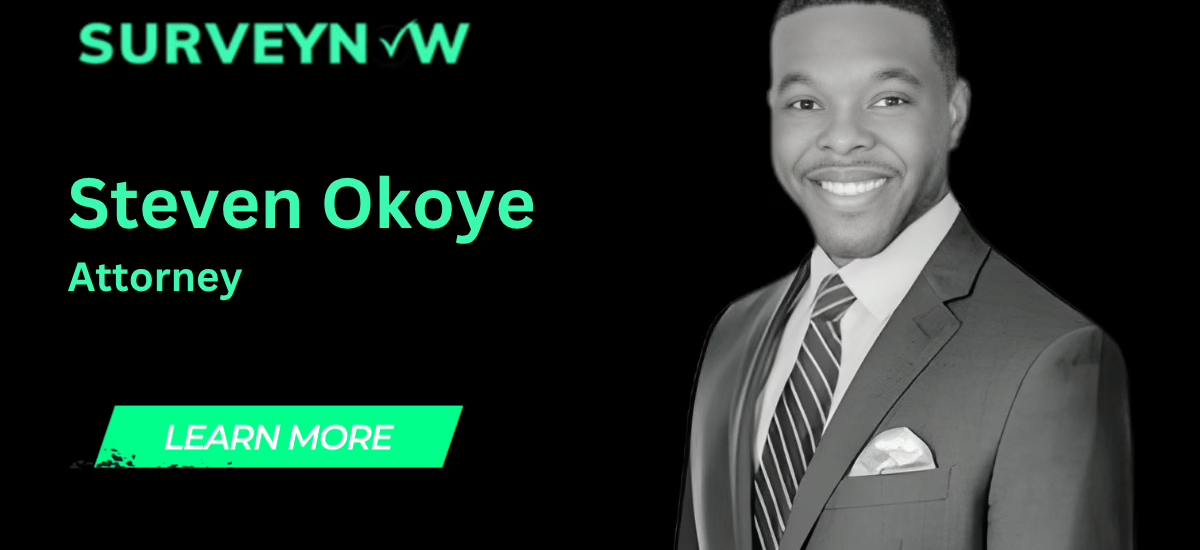
Steven Okoye is a corporate and healthcare attorney based in New York, where he currently serves as Deputy General Counsel. In that role, he focuses on compliance, corporate strategy, and risk management. With more than seven years of legal experience, he has worked closely with organizations to streamline operations, meet regulatory requirements, and build internal systems that support long-term growth.
Outside of his professional work, Okoye remains deeply engaged in mentorship, scholarship initiatives, and community service. He also maintains a strong connection to his hometown sports culture, following Philadelphia teams with the same loyalty he brings to his professional and personal commitments. In this interview, Okoye reflects on how his career developed, how his definition of success has evolved, and the habits that help him stay grounded.
How do you define success, and how long did it take you to find it?
Earlier in my career, I believed success was about reaching the next milestone. The next job. The next title. I thought that once I arrived at a certain destination, I would finally feel accomplished. That mindset pushed me forward, but it also kept me in a constant state of chasing.
Over time, I realized that success is not a destination. It is how you show up each day. I now define success through consistency and balance. Am I present for my family and friends? Am I someone others can rely on? Am I making progress, even incremental, compared to who I was yesterday?
Once I shifted my focus to those questions, everything else began to fall into place. My career became more fulfilling, my relationships deepened, and I developed a clearer understanding of myself.
What qualities define a strong entrepreneur?
Whether someone is starting a business or navigating a major career transition, the entrepreneurs who succeed tend to share one core trait: consistency.
Consistency separates those who make steady progress from those who burn out. I often compare it to physical fitness. You do not walk into a gym on the first day and try to lift the heaviest weight or run an extreme distance. Doing so usually leads to exhaustion or injury, which makes it harder to return. People who achieve long-term results show up regularly and do manageable work that compounds over time.
The same applies to entrepreneurship. Successful entrepreneurs do not chase every opportunity simply because it appears exciting, nor do they abandon their vision after a single setback. They build habits and rely on discipline more than motivation.
What challenges did you face early in your career?
One of the most significant challenges I encountered was learning how to communicate effectively with stakeholders outside the legal profession. I had the education and technical skills, but translating legal risk into practical guidance for non-legal leaders required intentional development.
I had to learn when to provide detailed analysis and when to focus only on the most critical information. That balance does not come naturally. It takes experience and self-awareness. Developing that mindset was an important step in becoming more effective in my role.
What trends in your field are you most excited about?
The pace of development in legal technology is encouraging. When technology is implemented thoughtfully, it allows legal teams to move beyond administrative tasks and contribute more directly to strategic decision-making.
For example, during my time at EHE Health, we implemented a contract management system that significantly improved efficiency across the organization. The response from teams outside the legal department was very positive. That kind of adoption reinforces my belief that legal technology should support collaboration and clarity, not add friction.
What advice would you give your younger self?
I would tell myself not to rush the process. Early in my career, I often felt pressure to move quickly or have everything figured out. Growth takes time.
I would also encourage myself to trust my intuition more. There were moments when I questioned myself unnecessarily, only to later realize that most people are learning as they go. Success is not about having all the answers. It is about remaining open-minded, learning quickly, and having the confidence to express your perspective.
What habits help you stay productive?
Blocking time on my calendar has been one of the most effective habits I have developed. If something matters, I schedule time for it and give it my full attention.
I also try to avoid diving straight into email at the start of the day. Completing one focused task before opening my inbox helps set a productive tone and prevents my day from becoming reactive.
How do you reset when you feel overwhelmed or unfocused?
I usually step away briefly. That might mean going outside or shifting my attention to a different activity for a short period. Sports also help me reset. Following the Eagles, Sixers, or Phillies gives me a way to disengage mentally without feeling drained.
What do you enjoy outside of work?
Community involvement is important to me. I am active in Omega Psi Phi Fraternity, particularly the Mu Gamma Gamma Chapter, and I help lead our scholarship foundation. Supporting young people in their pursuit of higher education is something I care deeply about.
I have also coached youth basketball in Winslow and served as a mentor in the Big Brothers Big Sisters Program during law school. Those experiences shaped how I think about leadership and service.
On a lighter note, I am a committed supporter of Philadelphia sports teams, regardless of the season or standings. There is something meaningful about loyalty and shared experience, even during difficult years.
During my final year of law school, I ran for Class President and created a few YouTube videos as part of the campaign. That creative process was rewarding, and it reminded me of the value in expressing who you are through content and storytelling.
Final Reflection
Steven Okoye brings a steady and intentional approach to both his professional responsibilities and his community involvement. Whether advising organizations on compliance and risk or mentoring young people through scholarship initiatives, he emphasizes presence, consistency, and reliability.
His perspective reflects a broader understanding of leadership, one rooted not in constant advancement but in showing up with purpose and remaining connected to the people and values that shaped him.
Disclaimer: This article is based on an exclusive interview conducted with Steven Okoye and shared with SurveyNow. All statements, facts, and viewpoints expressed herein were provided directly by Steven Okoye and reflect his personal experiences and perspectives.